What Should You Know Before Buying a Home in Pittsburgh?
TLDR: the house is almost certainly older than you think, and the things that will actually cost you money are underground and behind the walls, not the stuff that shows up first on a walkthrough.
Pittsburgh is still one of the more affordable real estate markets of its size in the country, and that part is real. What comes with that affordability is old housing stock, and old housing stock carries a specific set of risks that national home-buying advice never mentions.
So here is what I want my buyers to understand before they fall for a front porch. None of this should scare you out of buying an old Pittsburgh house. They are some of the best houses anywhere. It should just change what you look at, and in what order.
1. Start with the housing stock
A huge share of homes in the city and the older boroughs were built before 1950, and plenty go back to the 1890s and early 1900s. You feel it most across the East End, in places like Squirrel Hill, Highland Park, Friendship, and Lawrenceville, where almost everything predates the war. That age is the charm. The plaster, the woodwork, the brick, the nine-foot ceilings, you do not get those in new construction at this price. The same age is also the risk, because the expensive systems in these houses are often original or close to it. Knowing which ones is the whole game.
2. The big-ticket items, roughly in the order I worry about them
Sewer lines. This is the one buyers ignore and it is the one that empties savings accounts. In the City of Pittsburgh you own the sewer lateral from your house all the way to the main, often under the street, and old clay or Orangeburg pipe fails. A camera inspection before you buy runs a few hundred dollars and a failed line runs into the tens of thousands. If the house is older than 1980, scope it. I wrote a whole separate piece on sewer lines because it matters that much.
Water and basements. Pittsburgh is hills, clay soil, and a lot of rain. Water management is the quiet theme behind most of the worst surprises. Look at the grading and the downspouts, and where the water actually goes when it leaves the roof. A damp basement is sometimes a fifty dollar gutter extension and sometimes a major drainage project, and the only way to know is to look hard and ask the right questions.
Knob-and-tube wiring. Original electrical in a pre-1950 house is often knob-and-tube, and here is the part that catches people off guard: it is an insurance problem before it is a safety project. A lot of carriers will not write a new policy on a house with active knob-and-tube, or they will issue a short binder on the condition that you rewire the whole house within 30 or 60 days of closing. That can turn into a five-figure project on a clock you did not plan for. Find out what is in the walls before you are at the closing table.
Masonry and retaining walls. Half of Pittsburgh is built on a slope, which means retaining walls are holding up yards and driveways, and sometimes the house itself. A failing wall is one of the most expensive repairs in residential real estate and almost nobody budgets for it. Old brick and stone also need repointing over time. Walk the lot, not just the house.
3. Renovated versus flipped
There is a real difference between a house someone renovated to live in and a house someone flipped to sell, and learning to tell them apart will save you more than any other single skill in this market. Here is how I read it.
Start with how long they owned it. Pull up the history, and if someone bought in September and had it back on the market three to six months later, that is a flip, full stop. Nobody renovates their own home and lists it by spring.
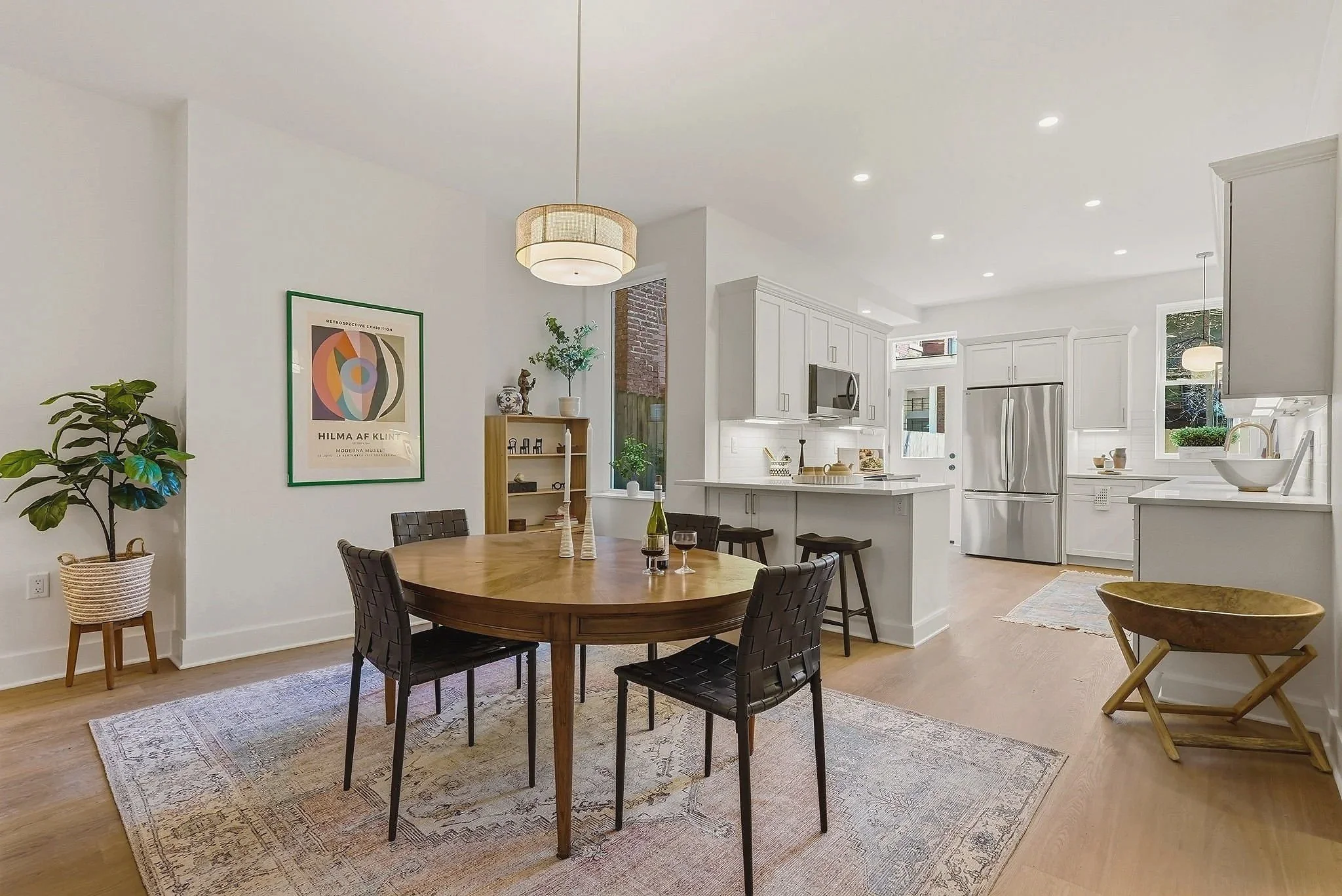
Then look at the finishes while you tour. Flips put the money where the camera goes. New appliances, new countertops, new cabinets, new floors, all of it fresh and all of it shallow. The kitchen is where it shows the most, because a real designer, or a contractor who actually understands kitchens, respects the work triangle, the path between the sink, the stove, and the fridge. In a lot of flips the layout makes no sense, the orientation is just off, because nobody was thinking about how you cook in the room. They were thinking about how it photographs.
Watch for finishes loud enough to distract you. A wood accent wall. One time I walked into a house with an entire accent wall of fake green plastic foliage, presented as a feature. When something in a room is shouting for your attention, ask what it is keeping your eye away from.
The biggest tell is what they did not touch. They will have redone the kitchen and the bathrooms, then tell you they do not know the age of the roof. Why would you replace the cabinets and not the roof, on a house you bought for fifty grand? That gap is the whole story.
A good flip does exist, and it leaves a paper trail. You can pull the permits on the city's One Stop PGH portal and see what was actually done, whether the furnace and the wiring got updated, whether any insulation went in. That is the unsexy stuff that costs real money and never shows up in a listing photo, and it is exactly what you want to see addressed.
When the work stops at the surfaces, that is lipstick on a pig, and you are the one who inherits the pig.
4. The transfer tax nobody warns you about
This one is not a defect, it is a line item, and it is a big one. The realty transfer tax in the City of Pittsburgh is 5% of the purchase price, which is one of the highest in the country. It breaks down as 1% to the state, 3% to the city, and 1% to the school district. Custom here is for the buyer and seller to split it down the middle, so plan on roughly 2.5% of the price out of your pocket, though who pays what is negotiable in the contract. On a $400,000 house that split is around $10,000. The rate is lower in many of the surrounding municipalities, so the number genuinely depends on which side of a city line the house sits.
5. What people fixate on that rarely matters
Buyers walk through a house and get rattled by the wrong things. A missing GFCI outlet near a sink is a cheap, same-day fix. Hairline cracks in old plaster are usually just a hundred-year-old house being a hundred-year-old house. Original windows are charming, often repairable, and almost never the emergency a buyer treats them as. These show up loud on an inspection report and they are mostly noise.
6. What people overlook that actually costs money
The quiet line items are the ones that hurt. Sewer laterals, water and drainage, retaining walls, and amateur renovations done without permits. None of these announce themselves on a quick walkthrough, and all of them can run five figures. The skill in buying an old Pittsburgh house is keeping your attention on those four and not letting a scuffed floor or an ugly bathroom pull your focus.
7. How I tell buyers to actually do it
Get the standard inspection, then add the ones that match the house. A sewer scope on anything old, and a real look at the electrical if the house predates 1950. Add a structural eye on any retaining wall that is holding back a hill. Spend your inspection budget on the systems that are expensive to fix, and let the cosmetics go, because cosmetics are the part you were always going to change anyway. And before you bind a homeowners policy on an old house, here are the questions I tell clients to ask their insurer. The gaps on an old Pittsburgh house are specific, and most people find them the expensive way. If you are starting to look in the East End or anywhere in the city and you want someone who reads the house for the real risks instead of the pretty ones, that is the part of this job I like most.
Reach out anytime.
Warmly, Emily